
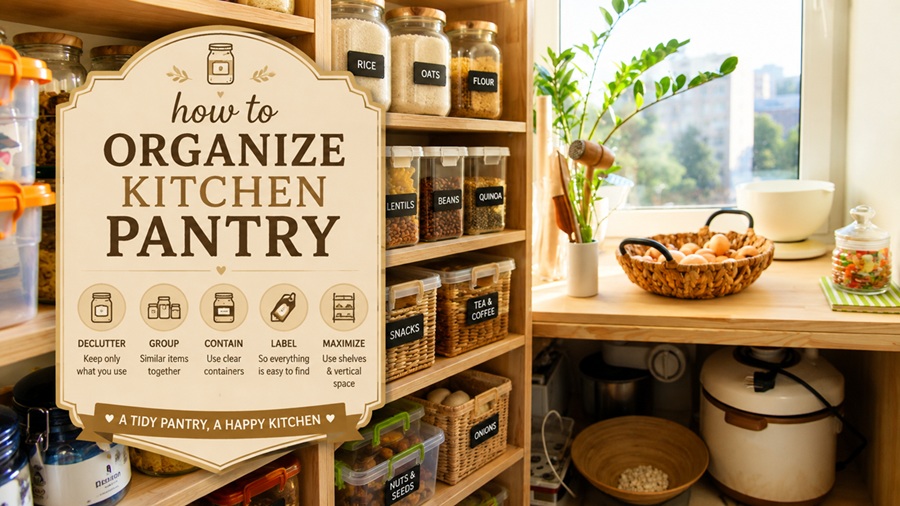
To organize a kitchen pantry, start by emptying and decluttering it, then group similar items into categories, create zones for each group, use containers and clear storage for loose items, and add labels so everything has a place and is easy to find. The core principle is that an organized pantry has a logical system, like items grouped together in designated zones, so you can see what you have, reach it easily, and keep it tidy over time. Whether your pantry is a walk-in, a closet, or a few cabinets, this same approach, declutter, categorize, contain, and label, turns a chaotic jumble of food into a functional, pleasant space that makes cooking and shopping easier.
A disorganized pantry wastes time, money, and food, as items get lost, expire unseen, or get bought in duplicate. An organized one, by contrast, makes meal prep smoother, cuts waste, and simply feels good to open. The best part is that organizing a pantry is very doable with a clear method. This guide walks through how to organize your kitchen pantry step by step, along with tips to keep it that way.
| First step | Empty and declutter the pantry |
| Then | Group similar items into categories |
| Create | Zones for each category |
| Use | Containers and clear storage for loose items |
| Add | Labels so everything is easy to find |
| Principle | A logical system where everything has a place |
| Works for | Walk-in, closet, or cabinet pantries |
| Result | A tidy, functional, waste-reducing pantry |
Start by Emptying and Decluttering
The first and most important step is to completely empty your pantry and declutter, since you cannot organize around clutter and old items. Take everything out so you can see exactly what you have, wipe down the shelves while they are empty, and go through every item. This clean slate is the foundation of a well-organized pantry.
As you sort through everything, check expiration dates and discard anything expired, stale, or that you know you will not use. Consolidate duplicates, and set aside unopened items you will not use to donate. This decluttering step alone makes a huge difference, since it removes the buildup that causes pantry chaos and reveals what you actually have. Starting fresh with only the items you use and want is what makes the rest of the organizing effective and lasting.
Group Items Into Categories
With everything out and decluttered, group similar items together into categories, which is the heart of an organized pantry. Grouping like with like means you always know where a type of item lives and can see how much you have. Common pantry categories help structure this.
- Baking supplies like flour, sugar, and baking staples
- Canned goods and jarred items
- Grains and pasta, such as rice, pasta, and cereals
- Snacks for easy grabbing
- Breakfast items
- Condiments, oils, and sauces
- Spices and seasonings
Group items in the way that matches how you cook and shop, so the categories make sense for your household.
Create Zones in Your Pantry
Once items are grouped, assign each category a designated zone in the pantry, so every group has its own home. Creating zones is what makes a pantry intuitive: baking supplies in one area, canned goods in another, snacks in a reachable spot, and so on. Think about placement as you set up zones, keeping frequently used items at eye level and within easy reach, heavier items lower down, and less-used or bulk items on higher or lower shelves. Keep kid-friendly snacks somewhere children can reach if that suits your household. Assigning a logical place for each category means everything has a home, which makes the pantry easy to use and, crucially, easy to keep tidy since items go back where they belong.
Use Containers and Clear Storage
Containers and clear storage are a game-changer for pantry organization, taming loose items and making everything visible and neat. Using the right storage keeps categories contained and your pantry looking orderly.
- Clear airtight containers for loose or bagged items like flour, pasta, rice, and cereal
- Bins or baskets to corral groups like snacks, packets, or small items
- Turntables for corners and for condiments or oils
- Shelf risers or tiered organizers so you can see items at the back
- Can organizers to keep canned goods tidy and visible
- Containers that maximize your shelf space and stack well
Clear containers let you see contents and quantities at a glance, which helps you know what you have and when you are running low, while bins group smaller items so they do not scatter.
Label Everything
The finishing touch that keeps a pantry organized is labeling, which reinforces the system and helps everyone in the household maintain it. Labeling containers, bins, and zones makes it clear where each item belongs, so things get put back in the right place and the organization lasts. Labels also make it easy to find what you need quickly and help family members follow the system rather than creating a new mess. You can label containers with their contents, and even mark zones or shelves by category. This simple step turns a one-time organizing effort into a lasting system, since when everything is labeled, everyone knows where things go, and the pantry stays tidy far longer.
Keeping Your Pantry Organized
Organizing your pantry is one thing; keeping it that way is the real goal, and a few habits make the system stick. Return items to their zones after use and after shopping, so nothing drifts out of place. Do a quick tidy and check periodically, discarding expired items and consolidating as needed, which prevents buildup from creeping back. Refill your clear containers when you restock, and keep an eye on quantities so you can shop smartly and avoid duplicates. Involving the whole household in following the system, helped by your labels, keeps everyone on board. With these light-touch habits, your organized pantry stays functional and tidy, continuing to save you time, money, and food long after the initial effort.
Frequently Asked Questions
How do I start organizing my pantry?
Start by completely emptying the pantry and decluttering, discarding expired or unwanted items and wiping the shelves. This clean slate lets you see what you have and is the foundation for grouping, zoning, containing, and labeling everything effectively.
How should I group pantry items?
Group similar items into categories that match how you cook and shop, such as baking supplies, canned goods, grains and pasta, snacks, breakfast items, and condiments. Grouping like with like means you always know where things are and how much you have.
Are clear containers worth it for a pantry?
Yes, they are a game-changer. Clear airtight containers tame loose and bagged items, keep food fresh, and let you see contents and quantities at a glance, so you know what you have and when to restock, while keeping the pantry neat and uniform.
How do I keep my pantry organized long term?
Return items to their zones after use and shopping, do periodic quick tidies and expiry checks, refill containers when restocking, and use labels so everyone follows the system. These light habits keep the organization from slipping back into chaos.
Common Pantry Organizing Mistakes
Knowing the pitfalls that trip people up helps you organize your pantry in a way that actually lasts, rather than reverting to chaos in a few weeks. A few common mistakes are easy to avoid once you are aware of them.
One frequent mistake is skipping the decluttering step and simply rearranging clutter, which never produces a truly organized pantry. Another is creating a system so complicated or rigid that it is hard to maintain, when a simple, intuitive setup works far better. People also often forget to label, which lets the organization slip as items get put back in the wrong places, and they sometimes buy containers before decluttering and measuring, ending up with storage that does not fit their space or needs.
Finally, an organized pantry is not a one-time project but an ongoing habit, so neglecting to maintain it, returning items and doing quick tidies, is what causes even a great setup to fall apart. Avoiding these mistakes, by decluttering first, keeping the system simple, labeling clearly, choosing containers to fit, and maintaining lightly, is what turns pantry organization into something that genuinely sticks.
- Rearranging clutter instead of decluttering first
- Making the system too complicated to maintain
- Skipping labels, so items drift out of place
- Buying containers before decluttering and measuring
- Neglecting the light upkeep that keeps it organized
Final Thoughts
Organizing a kitchen pantry comes down to a clear, repeatable method: empty and declutter, group items into categories, create a zone for each, use containers and clear storage to tame loose items, and label everything so it all has a place. This system works for any pantry, from a walk-in to a few cabinets, turning chaos into a functional space that saves time, money, and food. Best of all, with labels and a few simple habits, the organization lasts, making your pantry a pleasure to use every time you cook or shop.