
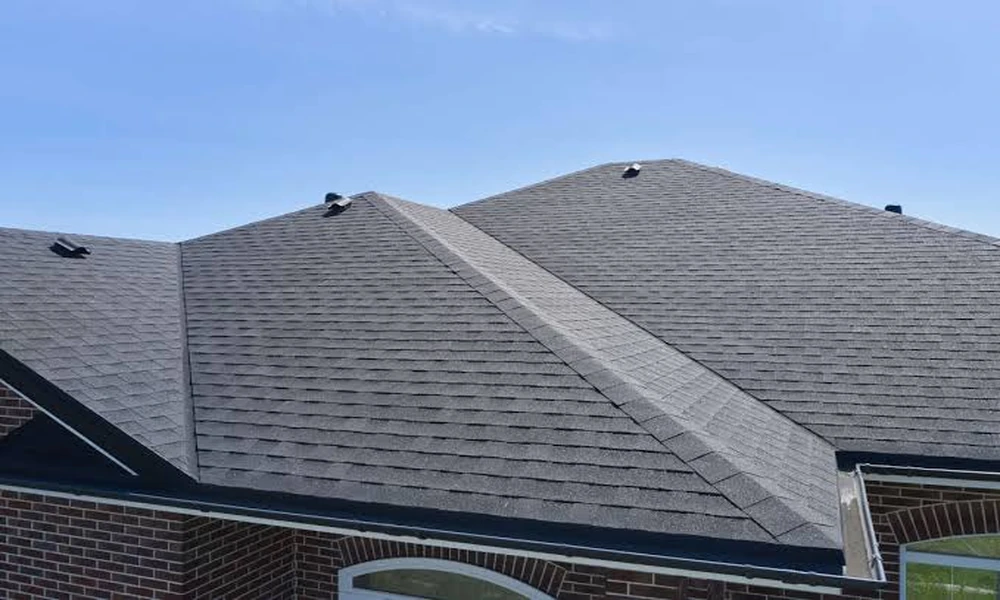
Roofers like My Roofing Crew will tell you that a roof in Middle Tennessee seldom fails on one terrible day. It gives out slowly, one season at a time, and each season leaves its own fingerprints. If you know what to look for and when, you can catch a small problem while it is still a small bill. Here is how the year tends to play out over a typical asphalt shingle roof around Nashville, Springfield and Clarksville.
Spring arrives with a drumroll
March through May is when the sky gets loud. Hail, straight line winds and tornado warnings are all part of the season, and the area has seen damaging twisters even outside spring, including the one that tore through Nashville in March 2020 and the December 2023 storm near Clarksville.
You do not need a tornado to lose shingles. Wind lifts the edges of tabs, breaks the seal that holds them down and lets the next gust peel them back. Hail leaves bruises that look harmless from the yard. After any hard storm, check the gutters and the ground for shingle granules, look along the ridge for missing caps and scan for lifted corners. Inside, a faint brown stain on a ceiling after a rainy night is worth chasing the same week, not the same year.
Spring is also when out of town crews show up with clipboards. Take your time, ask for a license number and compare more than one written estimate before you agree to anything.
Summer cooks things slowly
July looks quiet, but the roof is working harder than at any other time. Surface temperatures climb far above the air temperature, and the attic below can turn into an oven. Shingles expand, contract and dry out through the day, which wears away the granules that shield the asphalt from sunlight.
That is where airflow earns its keep. A well vented attic lets hot air escape through ridge or roof vents while fresh air enters under the eaves. When that exchange is weak, heat and moisture sit in the attic, cooling bills rise and the underside of the decking can start to dampen. Signs include a stuffy upstairs, rusty nail tips in the attic and insulation that feels clammy.
Humidity brings another visitor. Those dark streaks that creep down north facing slopes are usually a type of roof algae, not dirt or soot. According to a housing specialist with University of Georgia Extension, the growth tends to be heaviest on north or west facing roofs and under trees, where dew dries slowly. The streaks don’t weaken the shingles or shorten the roof’s life, but they do tell you that moisture lingers on that slope.
Fall is the bookkeeping season
When the heat breaks, the roof gets a breather and so do you. Fall is a sensible moment to take stock of what summer and spring did, because the weather is steady and crews are not buried in emergency calls.
Leaves are the main enemy now. They pile up in valleys and clog gutters, and wet leaf mats trap moisture against the edge of the roof. Overflowing water can run behind the fascia and rot it from the back. Clear the gutters, rinse the downspouts and trim any branch that hangs over the shingles, since limbs scratch the surface in wind and drop heavy loads in storms.
This is also a good season to check flashing. The metal around chimneys, vents and wall joints stands up to a lot of weather, but caulk dries out and seams open up. If a replacement is on your mind, mild fall weather is kind to the work, because shingles need some warmth to seal themselves down properly.
Winter shows you what you missed
Middle Tennessee winters are gentler than northern ones, though cold snaps, freezing rain and the occasional ice storm still happen. Frozen water expands in small cracks, and a gap in the flashing that stayed hidden all summer can suddenly drip into the attic.
Winter is also a good time to read the evidence from indoors. Look at ceilings for rings or discoloration, check closets on exterior walls for a musty smell and climb into the attic with a flashlight on a bright day. Daylight where it should not be, damp spots on the decking or frost on the underside of the roof are all worth a closer look. Never climb an icy roof yourself. Use binoculars from the ground and call someone with a harness and the right shoes.
One Saturday for each season
You do not have to become a roofer to keep an eye on things. A short routine a few times a year is enough.
- Spring, walk the yard after storms and look for lifted tabs, granules and dented metal
- Summer, check the attic for heat, damp insulation and rusty nails
- Fall, clear gutters and trim branches that overhang the roof
- Winter, scan ceilings and the attic after freezes, using binoculars from the ground
Take dated photos each time. A year of pictures makes it easy to see change, and it makes an insurance conversation much simpler if a storm strikes.
When a pro belongs on the roof
Some jobs are not for the weekend. A pro is the right call for anything that involves climbing a steep or wet roof, replacing flashing or locating a leak whose source is nowhere near the stain.
One option nearby is a Springfield based roofer holding Owens Corning Platinum Preferred status, whose inspectors carry HAAG certification for residential and commercial roofs. Its office sits at 3610 Kelton Jackson Road, Suite B, and it works across Middle Tennessee and beyond, handling repairs, replacements and gutters with free estimates. You can reach the team at 615-200-6870 on weekdays between eight and five.
Reading the calendar like a pro
The pattern is simple once you see it. Spring tests strength, summer tests airflow, fall tests drainage and winter tests the seams. A roof that survives all four in good shape has usually had someone paying attention.
So pick a Saturday, grab a camera and walk around the house. Ten quiet minutes in the yard can spare you a wet ceiling in April and a very different conversation with the person holding your estimate.