
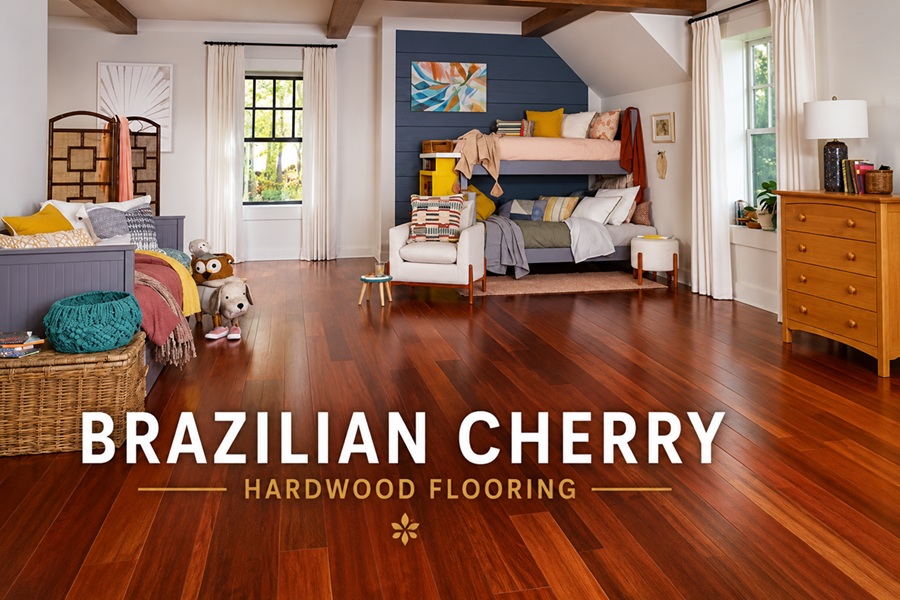
Brazilian cherry hardwood flooring, also known as Jatoba, is an exotic hardwood prized for its rich reddish-brown color and exceptional hardness, ranking among the harder wood flooring options and significantly harder than common domestic woods like oak or maple. Its most distinctive trait, besides that deep warm color, is that it is photosensitive, meaning it darkens and deepens in tone over time as it is exposed to light. Combined with dramatic grain and outstanding durability, this makes Brazilian cherry a striking, long-lasting floor, though its hardness and color changes are worth understanding before you choose it.
Despite the name, Brazilian cherry is not related to the cherry fruitwood; it is a dense tropical hardwood with a bold, luxurious look all its own. It is a popular choice for homeowners wanting a rich, durable, high-end floor. This guide covers its appearance and signature color change, its remarkable hardness and durability, the pros and cons, how to care for it, and what to expect on cost.
| Also known as | Jatoba |
| Color | Rich reddish-brown, often with darker streaks |
| Signature trait | Darkens over time with light exposure |
| Hardness | Very hard, well above oak and maple |
| Grain | Bold, dramatic, and varied |
| Durability | Excellent, resists dents and wear |
| Best for | High-traffic, high-impact, luxurious spaces |
| Care | Standard hardwood care, mindful of light exposure |
The Distinctive Look
Brazilian cherry is instantly recognizable for its warm, rich coloring, ranging from reddish-brown to deeper red tones, frequently accented with darker streaks that give it depth and movement. The grain is bold and dramatic, adding a lively, luxurious character that stands out from the more uniform look of many domestic woods. This vivid appearance is a big part of its appeal, lending rooms a warm, upscale, statement-making feel.
It is worth knowing that this bold look is a feature, not a subtle backdrop. Brazilian cherry makes a strong visual impression, so it suits people who want their floor to be a focal point. Its variation from board to board adds to the natural, high-end effect, but if you prefer a very uniform, understated floor, its dramatic character is something to consider.
It Darkens Over Time
One of the most important things to understand about Brazilian cherry is that it is photosensitive: exposure to light causes it to darken and richen in color over time. A freshly installed floor will noticeably deepen in tone over the following weeks and months as it matures, developing the rich, dark red character the wood is famous for. This is natural and generally considered part of its beauty, but it has practical implications.
Because the wood darkens with light, anything left sitting on the floor, like a rug or a piece of furniture, can block light and leave a lighter patch underneath while the surrounding wood darkens. Over time these even out once the covering is removed and the shaded area catches up, but it means you should be mindful about moving rugs and furniture periodically, especially early on, so the floor colors evenly.
Exceptional Hardness and Durability
Brazilian cherry’s standout practical quality is its hardness. It is a very dense, hard wood, considerably harder than popular domestic species like oak and maple, which translates into excellent resistance to dents, scratches, and everyday wear. This makes it a superb choice for busy households, high-traffic areas, and homes with kids and pets, where a softer wood would show damage more readily.
| Quality | Brazilian Cherry | Benefit |
| Hardness | Very high | Resists dents and impacts |
| Wear resistance | Excellent | Holds up in high traffic |
| Color | Rich reddish-brown | A warm, luxurious look |
| Longevity | Long-lasting | A durable, lasting floor |
Pros and Cons
Like any flooring, Brazilian cherry has clear strengths and a few considerations. Weighing them helps you decide if it is right for your home.
- Pro: a rich, dramatic, high-end appearance that makes a statement
- Pro: exceptional hardness and durability for busy spaces
- Pro: long-lasting and able to be refinished as solid wood
- Consideration: darkens over time, so rugs and furniture can cause uneven coloring
- Consideration: the bold look and color changes are not for those wanting a uniform, unchanging floor
- Consideration: exotic hardwood can cost more than common domestic species
Caring for Brazilian Cherry
Caring for Brazilian cherry follows standard hardwood practice, with a little extra attention to its light sensitivity. Sweep or dust regularly to keep grit off the surface, clean with a hardwood-safe product rather than soaking the floor, and wipe spills promptly. Use felt pads under furniture and mats at entrances to protect the finish. The one special habit is managing the color change: periodically moving rugs and furniture, particularly in the first months and in sunny rooms, helps the floor darken evenly and avoids lasting light patches. Otherwise, its hardness makes it relatively low-maintenance for such a striking floor.
What It Costs
As an exotic imported hardwood, Brazilian cherry typically costs more than common domestic woods like oak, reflecting its hardness, distinctive look, and import origins. The exact price depends on whether it is solid or engineered, the grade and plank dimensions, and current market factors, and you should budget for installation on top of the material. Many homeowners consider the premium worthwhile for the wood’s rich appearance and outstanding durability, which can make it a long-lasting investment. As always, get current quotes for your specific product and installation, since flooring prices vary.
Frequently Asked Questions
Does Brazilian cherry flooring really change color?
Yes. Brazilian cherry is photosensitive and darkens with exposure to light, deepening in color over weeks and months after installation. This is natural, but it means rugs and furniture can create lighter patches, so move them periodically for even coloring.
Is Brazilian cherry harder than oak?
Yes, considerably. Brazilian cherry, or Jatoba, is a very dense, hard wood ranking well above oak and maple in hardness, which gives it excellent resistance to dents and wear and makes it well suited to high-traffic homes.
Is Brazilian cherry good for high-traffic areas?
Very much so. Its exceptional hardness makes it resistant to dents, scratches, and wear, so it holds up well in busy households, hallways, and homes with children and pets where softer woods would show damage sooner.
How do I keep Brazilian cherry from fading unevenly?
Since it darkens rather than fades, periodically move rugs and furniture, especially in the first months and in sunny rooms, so light reaches the whole floor evenly. This prevents lasting lighter patches where coverings block the light.
Is Brazilian cherry flooring expensive?
As an exotic imported hardwood, it typically costs more than common domestic woods like oak, reflecting its hardness and distinctive look. Many find the premium worthwhile for its rich appearance and durability, but budget for both the material and installation.
Can Brazilian cherry be refinished?
Yes, solid Brazilian cherry can be sanded and refinished like other solid hardwoods, letting you renew the surface over its long life. Engineered versions can be refinished a limited number of times depending on the veneer thickness.
Is Brazilian Cherry Right for Your Home?
Brazilian cherry is a beautiful, durable floor, but its distinctive traits mean it suits some homes better than others, so it is worth matching it to your situation before committing. Thinking through a few questions helps you decide.
It is an excellent fit if you want a rich, dramatic, high-end look and value exceptional durability for a busy household with kids, pets, or heavy traffic. Its hardness means it shrugs off dents and wear that would mark softer woods, and its warm color makes a genuine statement. It is also well suited to anyone happy to embrace natural variation and the wood’s signature darkening over time.
It may be less ideal if you prefer a very uniform, unchanging, understated floor, since Brazilian cherry has bold grain and deepens in color with light exposure. You will also want to be comfortable moving rugs and furniture periodically so the floor colors evenly, and prepared for the higher cost of an exotic hardwood. Weighing these against your taste, lifestyle, and budget makes the decision clear.
- Great for those wanting a rich, dramatic, high-end look
- Excellent for busy homes needing serious durability
- Best if you embrace natural variation and darkening
- Less ideal if you want a uniform, unchanging floor
- Budget for the higher cost of an exotic hardwood
Final Thoughts
Brazilian cherry hardwood flooring, or Jatoba, is a striking, luxurious floor that pairs a rich reddish-brown color and bold grain with exceptional hardness and durability. Its signature photosensitivity means it deepens beautifully over time, though you will want to move rugs and furniture periodically so it colors evenly. It costs more than common domestic woods, but its dramatic look and toughness make it a lasting, high-end choice for busy, statement spaces. If you want a warm, durable floor with real character, Brazilian cherry delivers in a way few woods can match.