
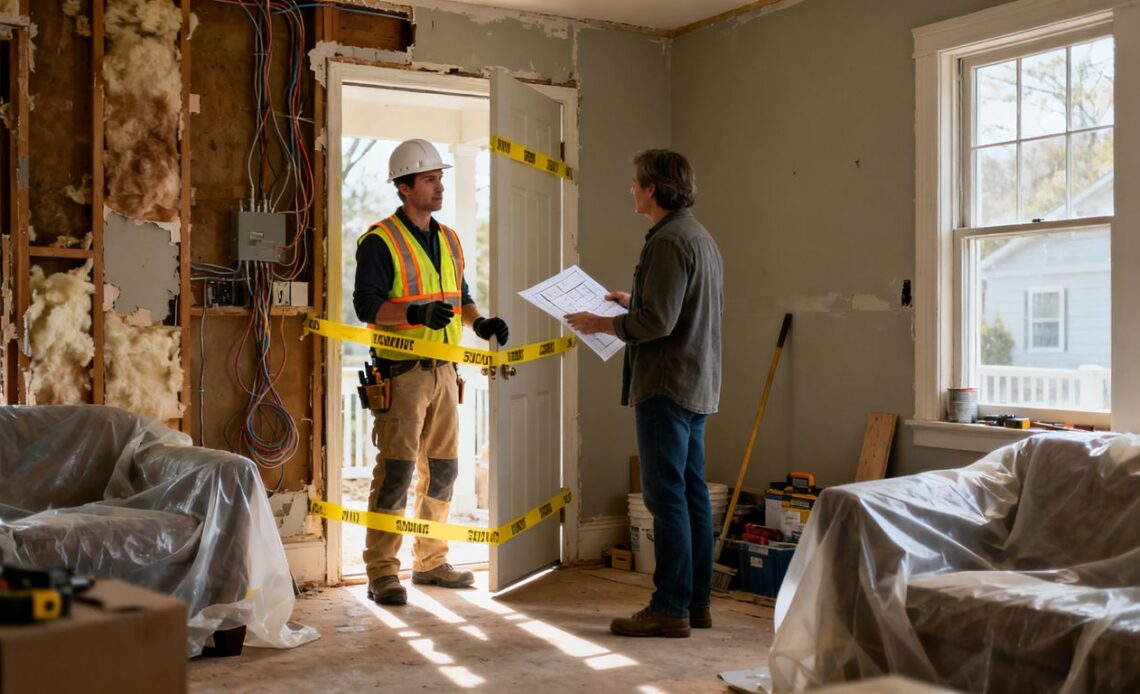
Asbestos is a group of minerals whose tiny fibers can become a concern when materials containing them are damaged or disturbed. A routine project, such as removing flooring or opening a wall, can turn into an exposure risk if it reaches suspect material. The main precaution is to identify potential hazards before work begins, rather than relying on what a surface looks like. In an asbestos renovation, the condition of the material matters as much as the planned work around it.
How asbestos-containing materials can release fibers when damaged
Many asbestos-containing products hold their fibers within a solid material when they are intact and left alone. Cutting, drilling, sanding, scraping, breaking, or pulling them apart can release fibers into the air. Because those fibers are too small to see, a room can appear clear even when dust has been disturbed.
Why older homes may contain asbestos in multiple locations
Asbestos was used in a range of building products, so a home may have more than one suspect material. Different finishes and repairs may also date from different periods; one remodeled room does not establish what lies behind another room’s walls or floors. A home’s age can help guide caution, but it cannot confirm whether asbestos is present.
How renovation work can spread fibers beyond the work area
Dust from disturbed material may travel on clothing, tools, or through ordinary movement between rooms. Air movement can also carry fine particles away from the immediate work area. For that reason, a project that seems limited to one surface can affect areas outside the work zone, particularly if debris is moved or cleaned up improperly.
Why exposure may not cause immediate symptoms
Asbestos-related diseases generally do not produce immediate warning signs after an exposure. Health effects may take many years to develop, and symptoms alone cannot establish whether exposure occurred. Anyone concerned about a possible exposure can discuss the circumstances with a healthcare professional; the most useful step during renovation is prevention before material is disturbed.
Where asbestos may be found in a home
There is no single room or finish that reliably signals asbestos. It may be present in certain older building products, but similar-looking products can be asbestos-free. Since materials are often layered or concealed, renovation planning should consider both visible finishes and what the work may uncover.
Insulation around pipes, boilers, and ducts
Some older homes have asbestos-containing insulation on heating pipes, boilers, or ducts. It may appear as a covering, a cement-like coating, or insulation at joints and bends. If such material is damaged, crumbling, or in the path of planned work, it should be left undisturbed until a qualified professional can assess it.
Floor tiles, backing, and adhesives
Certain older floor tiles, sheet flooring, backing, and adhesives may contain asbestos. A new floor installed over an older one can conceal those layers, so pulling up a surface without checking what is beneath it may disturb suspect material. Age and appearance are not enough to determine whether a particular floor product contains asbestos.
Wall, ceiling, and roofing materials
Some older wall and ceiling products, joint compounds, textured finishes, ceiling tiles, roofing products, or siding may contain asbestos. A renovation can reach these materials through sanding, scraping, cutting, or demolition, even when the visible project seems cosmetic. A home renovation guide also describes common locations and why assessment before disturbance matters.
Other materials that may be hidden behind finishes
Potential asbestos-containing materials are not limited to the surfaces that are easiest to see. During planning, it can help to think through which layers a project could affect, including materials behind a finish or around building systems. Examples include:
- Insulation or fireproofing concealed above a ceiling
- Cement products behind siding or other exterior finishes
- Older sealants, mastics, or compounds beneath or around installed materials
These examples are possibilities, not a way to identify asbestos by sight. If a project could expose hidden layers, an assessment before demolition is safer than making assumptions once work is underway.
What you can and cannot tell by looking
A visual check can help a homeowner notice damage or identify where a planned project may reach older materials. It cannot confirm whether asbestos is present. That distinction matters: guessing incorrectly can lead either to unnecessary alarm or to disturbance of material that should have been assessed first.
Why appearance alone cannot confirm asbestos
Asbestos-containing products can look much like products made without asbestos, and the same type of material may vary in appearance. Color, texture, age, and a manufacturer’s general product description are not reliable confirmation for a specific installed material. Testing by a qualified professional is the way to determine whether a suspect sample contains asbestos.
Clues that call for extra caution in older homes
A home’s age, old renovation layers, and materials in areas such as utility rooms or around heating systems may be reasons to pause before work. Visible deterioration can also call for professional attention, but it does not prove asbestos is present. The practical clue is often the planned task itself: if it involves disturbing a material that has not been assessed, work should wait.
Why damaged material should not be sampled by homeowners
Taking a sample can disturb the material and release fibers, especially if it is already damaged or friable. A homeowner may also have difficulty collecting a representative sample without spreading dust or contaminating nearby surfaces. Rather than cutting or scraping a piece for testing, the safer course is to avoid contact and ask a qualified asbestos professional about assessment.
How a qualified professional can arrange testing
A qualified professional can inspect the relevant areas, determine which materials need sampling, and arrange analysis through an appropriate laboratory. The inspection should reflect the planned scope of work, including areas that demolition or repairs could expose. The resulting information helps guide decisions about whether the project can proceed as planned or needs additional controls.
How to plan an asbestos renovation safely
A safer renovation begins before tools are brought out. The homeowner, designer, or contractor should consider whether planned work could disturb suspect materials and resolve that question before demolition or repairs start. Local rules vary, so planning also means confirming what applies to the property and the specific work.
Check the home’s age and available renovation records
The home’s construction date can help set expectations, but it is not proof that asbestos is present or absent. Previous inspection reports, renovation records, and product information may help explain what has already been examined or replaced. If the records do not cover the areas the new project will disturb, they should not be treated as clearance for those areas.
Pause work before disturbing suspect materials
If a project encounters an unfamiliar layer, insulation, or damaged finish, work should pause before that material is cut, broken, scraped, or removed. This is a point to clarify what the material is and whether it falls within the scope of any prior inspection. Waiting can be inconvenient, but it is preferable to creating dust that may be difficult to contain.
Arrange an inspection before demolition or repairs
An inspection before work begins can identify suspect materials in the project area and help establish a safe plan. The scope should be broad enough to cover the surfaces and concealed layers that the work may affect, rather than only the room’s visible finish. For guidance specific to project notifications, permits, and local requirements, consult the relevant project notification requirements and confirm details with the appropriate authority.
Confirm local requirements and contractor credentials
Rules can differ by location, project type, and the amount or condition of material involved. Before work proceeds, the homeowner should verify any inspection, notification, permitting, or contractor requirements that apply locally. Credentials should be checked with the relevant licensing or accreditation authority, not assumed from a contractor’s general renovation experience.
What to do if material is accidentally disturbed
An unexpected encounter with suspect material can be unsettling, but quick, calm steps can limit further disturbance. Work should stop while the situation is assessed; continued demolition or cleanup can spread dust. The material should be treated as suspect until a qualified professional advises otherwise.
Stop work and keep people away from the area
Stop the activity that disturbed the material and keep other people and pets away from the immediate area. Avoid walking through the debris or carrying tools and materials elsewhere. If the area can be left without re-entering or disturbing anything, keep it undisturbed while seeking professional advice.
Avoid sweeping, vacuuming, or handling debris
Dry sweeping, household vacuuming, and picking up fragments can disturb fine dust and spread it. Do not shake out clothing or move debris to another room. Avoid trying to clean the area yourself; a professional can advise what should happen next based on the material and circumstances.
Contact an asbestos professional for next steps
Contact a qualified asbestos professional and explain what work was happening, what material was disturbed, and whether debris or dust is visible. Do not collect a sample or resume work while waiting for advice. If there is uncertainty about immediate safety or local reporting obligations, the relevant local authority can also provide direction.
Tell contractors about the incident before work resumes
Anyone returning to the project needs to know that suspect material was disturbed and that the area has not yet been assessed or cleared. Share the professional’s recommendations and any inspection or testing results before contractors restart work. A clear handoff helps prevent the same material from being disturbed again.
How professionals manage asbestos risks
The right response depends on the material’s condition, location, and the work planned nearby. A professional assessment helps determine whether the material can remain in place with appropriate management or whether work on it is needed. The aim is to control the risk without treating every suspect material as though it requires the same solution.
When repair, enclosure, or removal may be considered
Depending on its condition and location, a material may be managed in place, repaired, enclosed, or removed. A professional can explain which approach fits the situation and applicable requirements. The fact that a material contains asbestos does not, by itself, mean that immediate removal is always the appropriate choice.
How licensed specialists contain and handle materials
Where regulated work is required, qualified specialists use procedures and controls appropriate to the material and project. These may include isolating the work area, limiting dust, and handling and disposing of material under applicable rules. Homeowners should leave this work to trained professionals rather than attempt removal or cleanup themselves.
What clearance checks may be required after the work
After work, inspection or other clearance checks may be required depending on local rules, the project, and the work performed. The responsible professional can explain what checks apply and what documentation will be provided. The area should not be treated as ready for normal use until the applicable work and verification steps are complete.
How to document the work for future owners and contractors
Keep inspection reports, laboratory results, work plans, disposal records, and any clearance documentation with the home’s renovation records. Note which areas were assessed and what work was completed, since a report for one location may not cover another. These records give future owners and contractors a useful starting point before they plan work that could disturb the same materials.